December 17, 2025
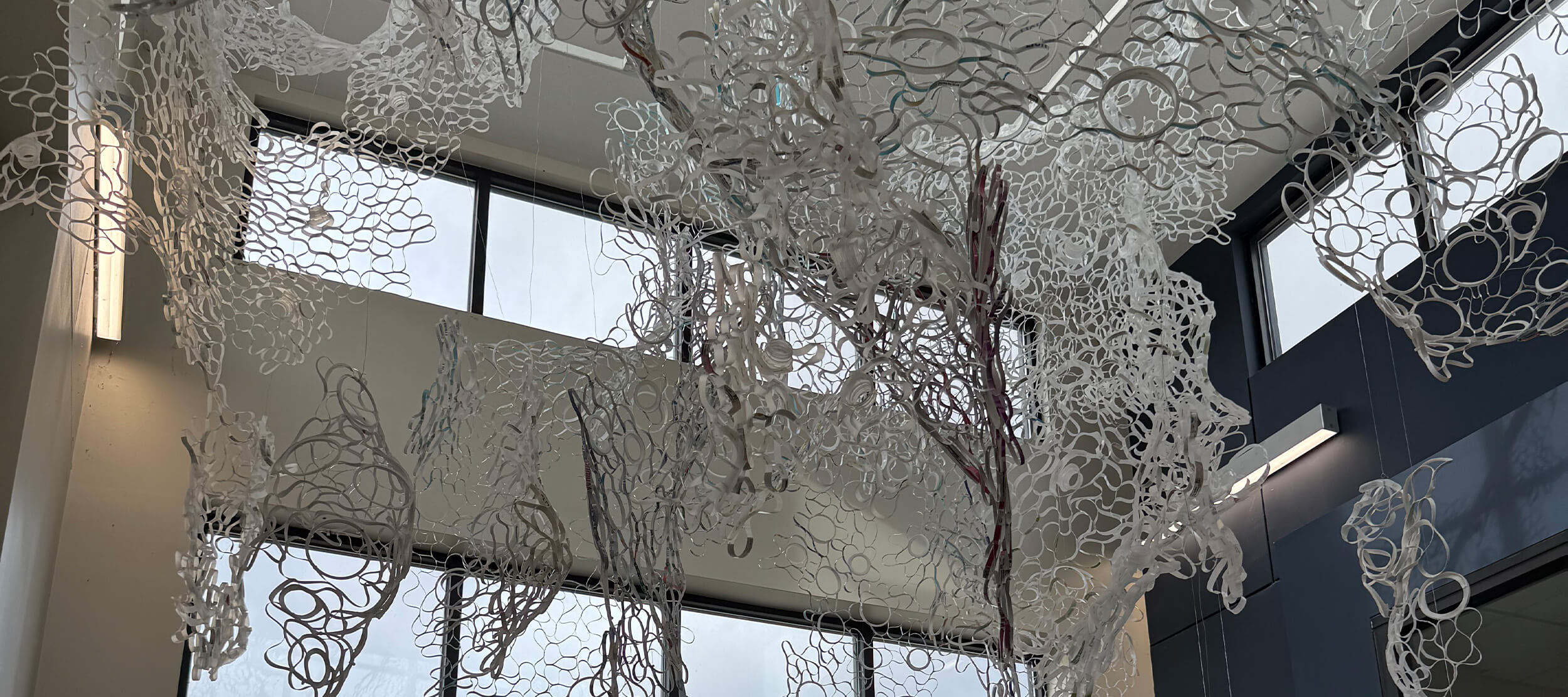
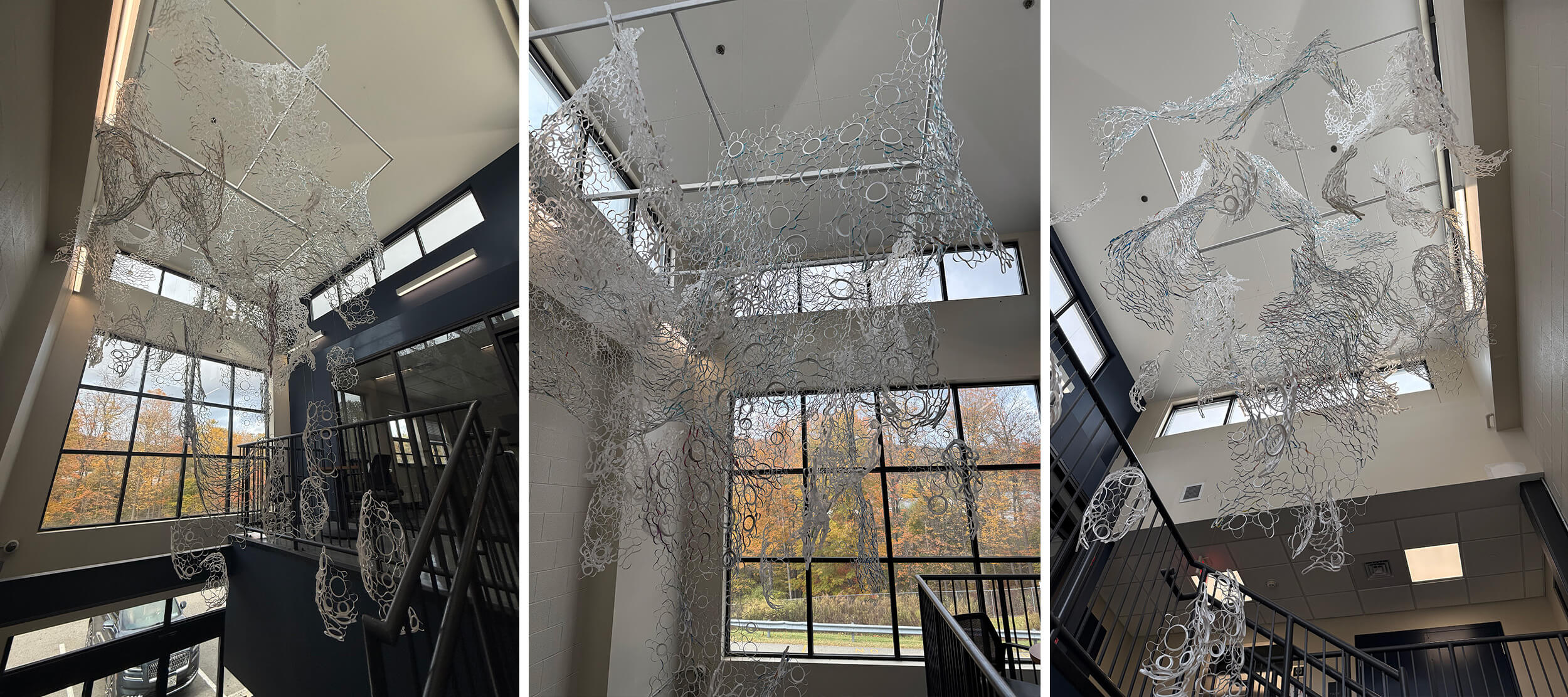
Walk into Rockland Green's Materials Recovery Facility (MRF) (aka “Murf”), and you might do a double-take. Suspended overhead is a breathtaking installation that resembles flowing coral reefs or drifting clouds – a sculpture so intricate and beautiful, you'd never guess it's made entirely from household waste! Yogurt cups, plastic bottles, and milk jugs twist and curve into an elegant dance of color and form, transforming what most of us thoughtlessly toss into the trash into something extraordinary.
The artist behind this remarkable work is Poramit Thantapalit, whose creative process starts not in an art supply store, but in his own kitchen. Over the years, Thantapalit has pioneered a unique approach to mixed-media art, using recycled materials and plastic bags to create large-scale installations that challenge viewers to reconsider their relationship to waste. His collaboration with Rockland Green isn't just about beautifying our space – it's about sparking a crucial conversation about consumption, disposal, and environmental responsibility.
But here's the thought that may stop you in your tracks: the massive sculpture hanging at Rockland Green represents just two years' worth of trash from a single household!
If one person generates enough plastic bottle caps, containers, and packaging to create an installation this large, imagine the collective impact of an entire county.
We sat down with Poramit to discuss his artistic journey, his innovative techniques for working with waste materials, and what he hopes Rockland County residents will take away from his work, especially when it comes to thinking twice before disposing of materials that could have a second life.
1. Can you tell us about your background as an artist and sculptor?
I have a Master's degree in 3D Computer Graphics and worked as a graphic designer for ten years before transitioning into art. About 12 years ago, I began working with mixed media, using both recyclable and non-recyclable materials. I enjoy creating 3D objects and large-scale installations that viewers can engage with from multiple angles. One of the most exciting challenges for me is finding ways to use sculpture to transform space.
2. What inspired you to create this sculpture using recycled yogurt containers?
The inspiration came from the curves, twists, and natural movements found in materials. I primarily used yogurt cups and milk jugs – once cut into strips, they are easy to twist and bend into flowing lines. The forms reminded me of coral under the sea and clouds in the sky. I started with small components and gradually connected them to build a large installation.
3. Have you created similar sculptures with recycled materials before?
Yes, I created a sculpture for Acadia Earth in 2019 that looks similar to the piece at Rockland Green. It was part of a ceiling installation representing coral under the sea with over 30 jellyfish made from plastic bags. This similar installation has also been exhibited at Rockland Center for the Arts in 2023 and at Bergen Community College in 2022. At BCC, I showed six other installations using materials like paper, cardboard, egg cartons, plastic bags, used clothing, and hanging cloth.
4. How do you collect, sort, and prepare the recycled materials before using them?
I only use my own household waste, such as plastic bottles and paper. I collect, clean, and sort them by color, shape, and size. I try to use every part of the material to avoid creating additional waste. For example, when using a plastic bottle, I separate the cap, label, and bottle body, and use each part in different projects. You can see from this installation at New Jersey City University that I used every part of 7Up bottles.
5. What challenges do you face working with these materials?
One major challenge is how to connect the materials without using glue or permanent bonding. My goal is to make everything modular, so I use interlocking techniques, wire, rope, or fabric to tie pieces together. This allows the sculpture to be disassembled, reassembled in a new shape, and easily stored, saving both space and resources.
6. How does your work speak to recycling, waste, and environmental awareness?
My work is made entirely from my own trash. I want viewers to reflect on how much waste each of us generates. By transforming garbage into art, I hope to raise awareness about consumption and inspire people to think twice before throwing things away.
7. What do you hope viewers and the community take away from seeing this sculpture?
I want people to feel the scale of the waste we produce. The fact that this large installation is made entirely from my personal trash collected over two years often surprises viewers. It sparks the realization that if every individual produces this much, the environmental impact is massive. I think art is an important way to inspire people to protect our environment.
8. Do you have any upcoming projects that use recycled or post-consumer materials?
Yes, I’ve been collecting plastic bottle caps for the past two years. I’m planning to use them to create a wearable sculpture — possibly a dress — made entirely from those caps.
Click here for a behind-the-scenes look at Poramit creating and installing"Coral Clouds" at Rockland Green’s MRF!
Would you like to donate unused art supplies in Rockland County?
The Montefiore Nyack Foundation in Nyack, NY, accepts unopened, unused art supplies for their hospital program! Call (845) 348-2775 to speak with the Foundation Events Manager and arrange drop-off.